
Budget, part 1 - The landing
In this first part, we make the 2026 landing reliable line by line, using the tools built into KANAP. It then becomes the base of the 2027 budget.
September. Finance asks for a first version of the 2027 budget, and last year’s Excel file comes out of the drawer: two hundred lines, eight tabs, three versions that no longer agree. Here we go again?
This series walks through the preparation of a complete OPEX budget in KANAP. Part 1: make the current year’s landing reliable. Part 2: roll the numbers forward to 2027. Part 3: present, defend, lock. The principle holds from start to finish: you only touch what changes, KANAP handles the rest, presentation included.
Your lines still live in Excel? “Import CSV” loads them in one go, and the review starts the same day.
Expected landing, the column that matters
Every spend item (OPX-12, OPX-47…) carries four budget columns per year: Budget, Revision, Actuals and Expected landing, across last year, the current year and the two next ones. At this stage, the point is to know where and how the current year will end. Time to put down your best estimate of what each item will really have cost by December 31.
It is also the base of next year’s budget: a careful landing avoids rolling into January amounts that already changed during the year.
Filter like in Excel
Nobody reviews two hundred lines in one pass. The OPEX list handles like a spreadsheet: a quick filter at the top, checkbox filters on every column. Paying company, Account, Allocation, Currency, IT owner, Business owner, Analytics: tick a few boxes, the list narrows, and the totals row recalculates over the selection.
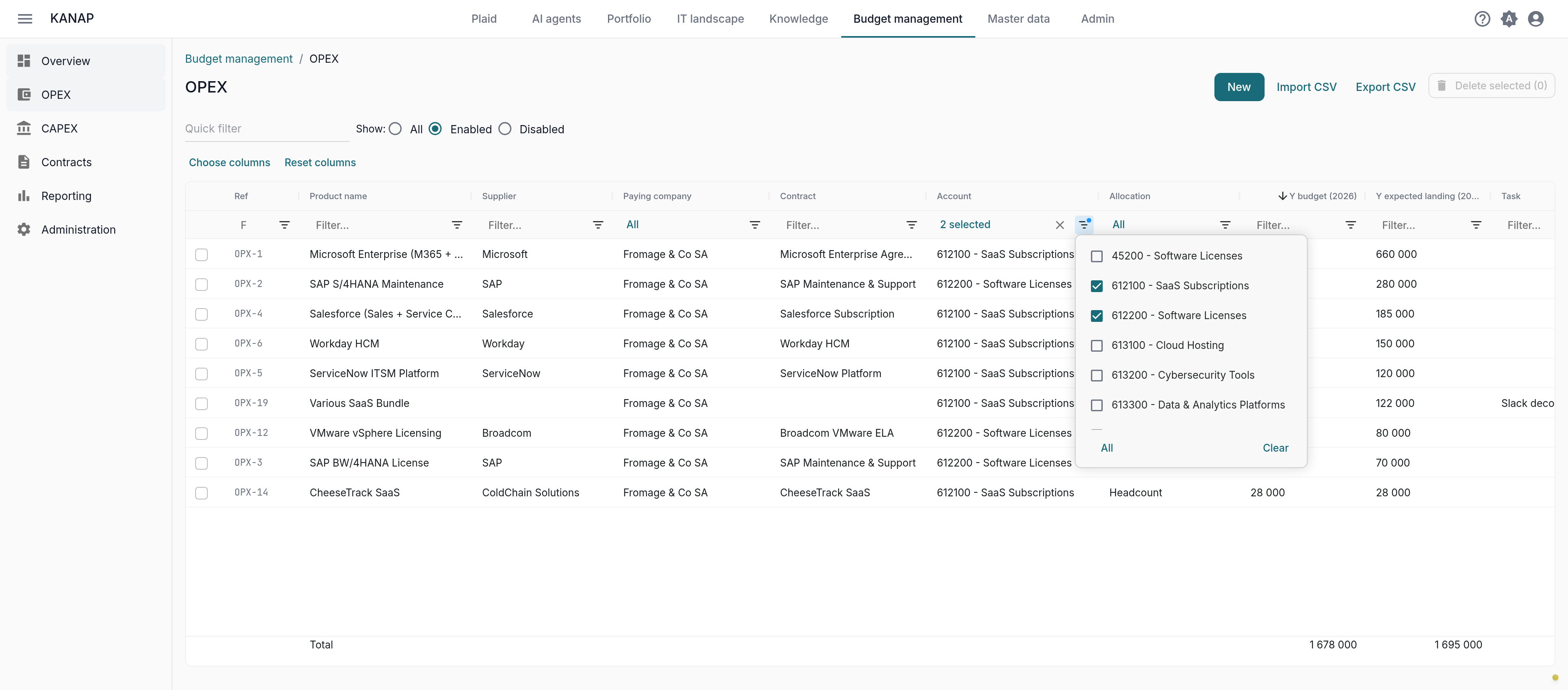
The review then splits up naturally: services one morning, licences the next day, one subsidiary’s items after that. Filters are kept in the URL; open a line, come back, the selection has not moved.
In a hurry? Sort by amount and work through the 20 largest lines, which usually carry most of the budget.
Walk the selection, item by item
Open the first item of the selection, Budget tab. The prev/next arrows read “Item 3 of 42” and follow your filtered list, in its sort order. You move line by line and correct the landing only where reality diverged: a renegotiated contract, a delayed project, cloud usage above plan.
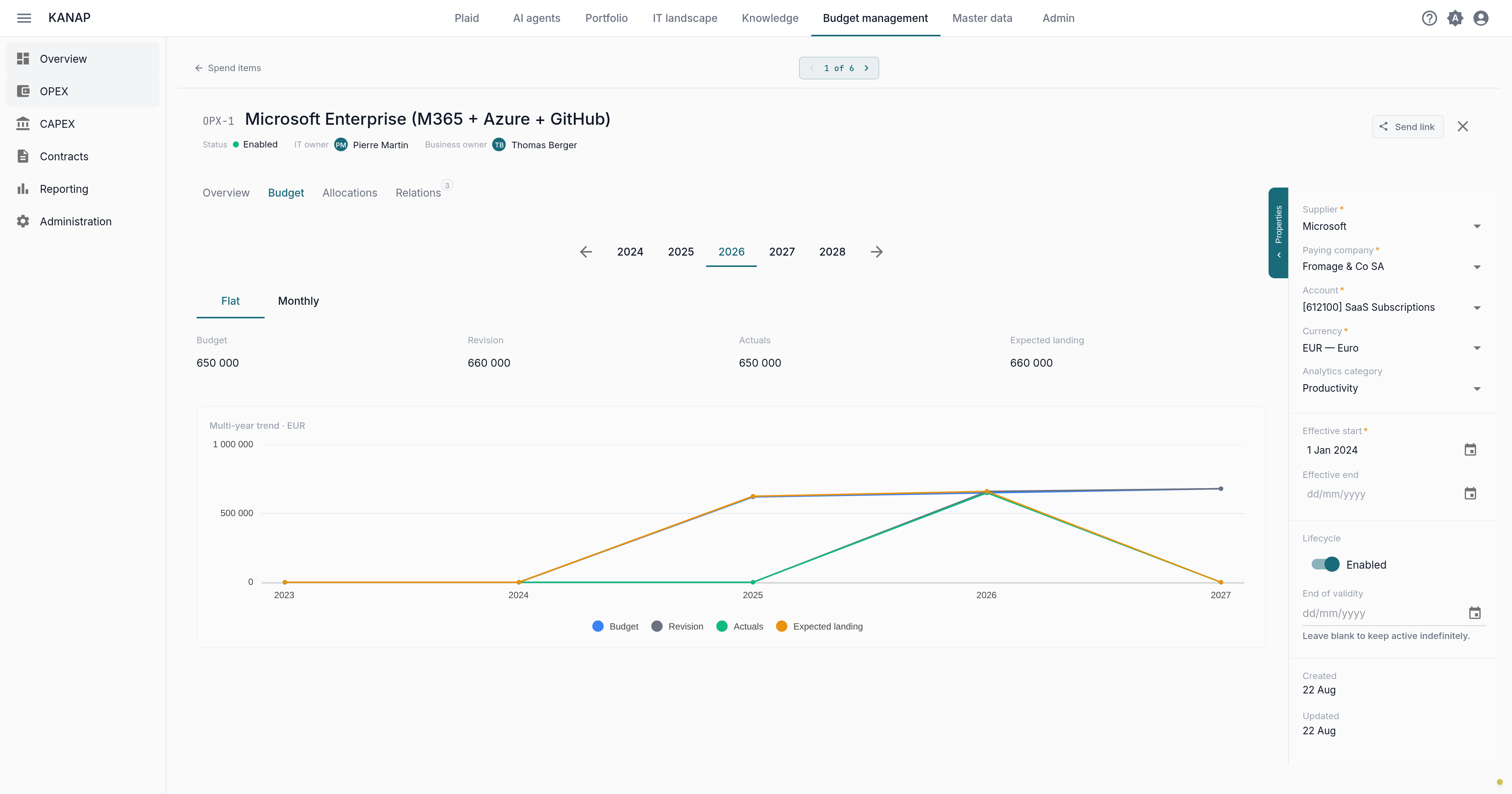
For lines that deserve better than an annual amount, the Budget tab offers a Monthly mode and a “Spread an annual amount” helper, flat or 4-4-5.
Lines where nothing moved stay empty. Part 2 fills them all at once.
While you’re there: note what you already know about 2027
The “Y+1 budget (2027)” column sits right next to it. Use the review to enter the changes already decided: a scope extension, a renegotiation, a termination… For contract ends, no memory effort: each item shows its contract, and each contract carries its cancellation deadline. The 2027 deadlines can be read in the contracts list.
Use the notes too: one short line (“+10% in Q3, renegotiation under way”) and you will thank yourself in six months.
These hand-entered amounts are safe: part 2’s automatic copy only fills empty cells.
Pro tip: currencies first
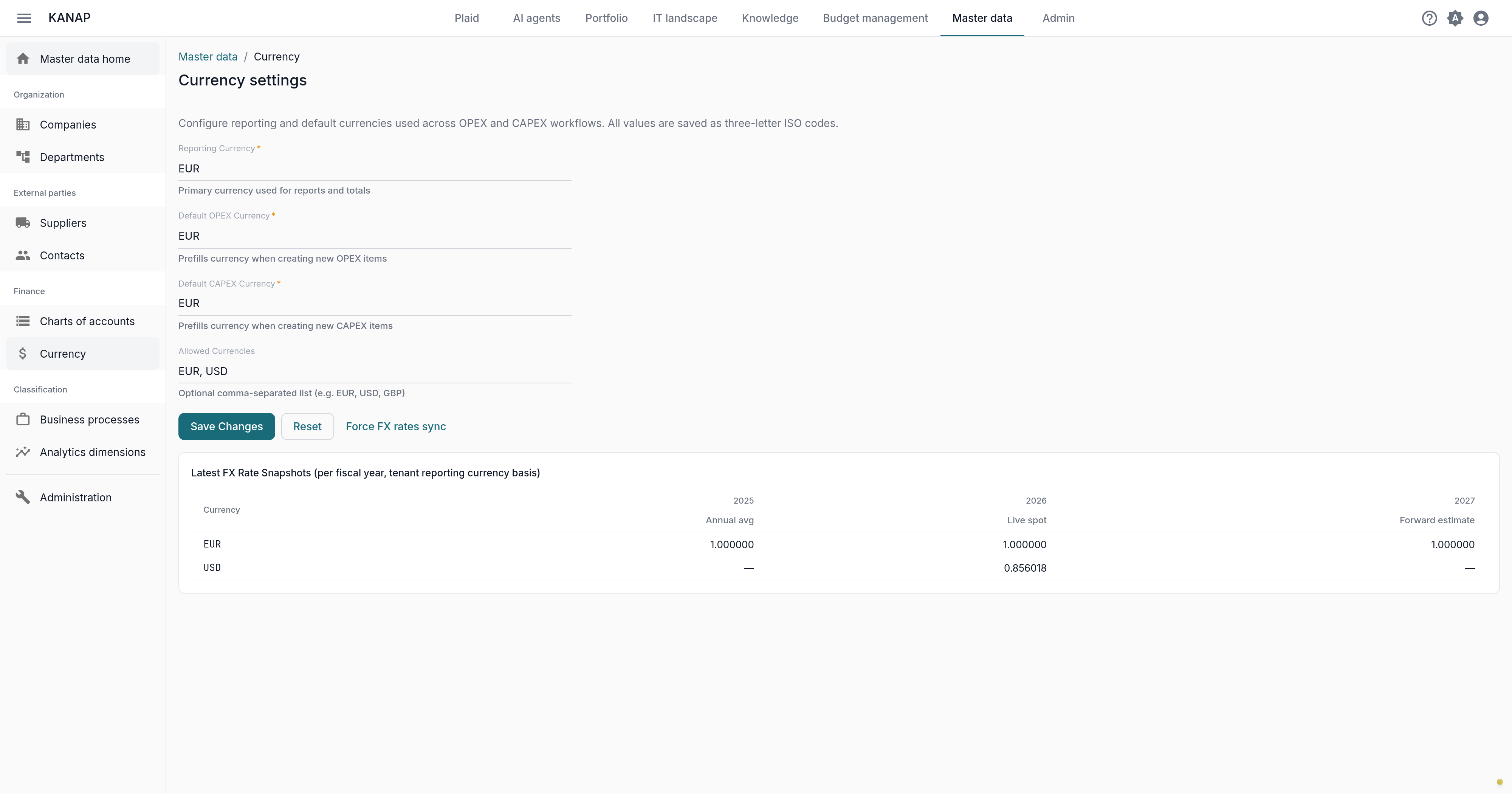
KANAP handles multi-currency budgets, but set them up beforehand. In Budget management → Administration → Currencies, define the reporting currency, the default OPEX and CAPEX currencies and the list of allowed currencies. FX rates sync automatically per fiscal year. Each item keeps its currency; totals and reports convert to the reporting currency.
What about CAPEX?
Everything above applies to investments: CPX lines, same columns, same filters, same navigation. The landing review happens in the same place, CAPEX tab. Part 3 shows both envelopes side by side.
What’s next
By the end of this review, the 2026 landing is reliable on the lines that moved and 2027’s big changes are already noted. In part 2, we fill in everything else in three clicks.